 Suman Gautam
 When applying for a loan, you’ll often come across two common terms: secured loan and unsecured loan. Understanding the difference between these loan types is important because it affects your eligibility, interest rate, loan amount, approval process, and the risk involved.
Many first-time borrowers choose a loan without knowing whether it requires collateral or not. As a result, they may end up paying higher interest or selecting a loan that doesn’t suit their financial needs.
In this guide, we’ll explain secured and unsecured loans in simple language, compare their features, discuss their advantages and disadvantages, and help you understand which option may be suitable for different situations.
What Is a Secured Loan?
A secured loan is a loan backed by an asset (also called collateral). The borrower pledges an asset to the lender as security for the loan.
If the borrower fails to repay the loan according to the agreed terms, the lender may take action regarding the pledged asset as permitted by the loan agreement and applicable law.
Common assets used as collateral include:
- House or flat
- Commercial property
- Land
- Gold jewellery
- Fixed Deposit (FD)
- Insurance policies (where accepted)
- Other eligible financial assets
Since the lender has collateral as security, secured loans often carry lower interest rates than unsecured loans. However, rates vary by lender and borrower profile.
What Is an Unsecured Loan?
An unsecured loan does not require the borrower to pledge any asset as collateral.
Instead, lenders evaluate factors such as:
- Income
- Employment or business stability
- Credit score
- Existing debt
- Repayment history
Because the lender takes on more risk, unsecured loans may have higher interest rates than secured loans.
Secured vs Unsecured Loans: Quick Comparison
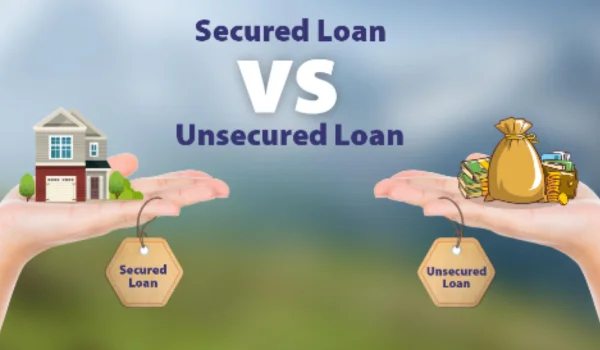
| Feature | Secured Loan | Unsecured Loan |
| Collateral Required | Yes | No |
| Interest Rate | Generally lower | Generally higher |
| Loan Amount | Often higher | Usually lower than secured loans |
| Approval Basis | Collateral and financial profile | Income, credit score, and financial profile |
| Risk to Borrower | Risk of losing pledged asset in case of default | No collateral at risk, but default has financial and legal consequences |
| Processing Time | May be longer due to collateral verification | Often faster |
Examples of Secured Loans
Some common secured loans include:
Home Loan
The property being purchased usually serves as security until the loan is repaid.
Loan Against Property
Borrowers can obtain a loan by pledging eligible residential, commercial, or industrial property.
Gold Loan
Gold jewellery is pledged as collateral, and the loan amount depends on factors such as its purity and value.
Loan Against Fixed Deposit
Banks often allow customers to borrow against their fixed deposits without breaking them.
Vehicle Loan
In many cases, the financed vehicle serves as security until the loan is repaid.
Examples of Unsecured Loans
Common unsecured loans include:
- Personal loan
- Education loan (depending on the loan amount and lender requirements)
- Consumer durable loan
- Credit card loan
- Small instant loans offered by banks or NBFCs
Approval depends largely on the borrower’s creditworthiness.
Advantages of Secured Loans
Secured loans offer several benefits.
Lower Interest Rates
Since the lender has collateral, interest rates are often lower than those on unsecured loans.
Higher Loan Amount
Borrowers may qualify for larger loan amounts depending on the value of the collateral and the lender’s assessment.
Longer Repayment Tenure
Many secured loans offer longer repayment periods, making monthly EMIs more manageable.
Easier Approval for Some Borrowers
Applicants with valuable collateral but limited income history may still qualify, depending on the lender’s policies.
Disadvantages of Secured Loans
There are also some drawbacks.
- Collateral is required.
- Approval may take longer because of asset verification.
- Documentation is usually more extensive.
- Default may lead to action against the pledged asset as per the loan agreement and applicable law.
Advantages of Unsecured Loans
Unsecured loans are popular because of their convenience.
No Collateral Needed
You do not need to pledge property, gold, or other assets.
Faster Processing
Many personal loans are processed quickly because no collateral verification is involved.
Less Documentation
Documentation is generally simpler compared to secured loans.
Suitable for Small Financial Needs
These loans are commonly used for:
- Medical emergencies
- Weddings
- Travel
- Home renovation
- Education expenses
- Debt consolidation
Disadvantages of Unsecured Loans
Unsecured loans also have limitations.
- Interest rates are generally higher.
- Loan amounts may be lower.
- Strong credit history is often important.
- Eligibility requirements may be stricter for some borrowers.
Which Loan Should You Choose?
The right choice depends on your financial situation and borrowing needs.
A secured loan may be suitable if:
- You need a large loan amount.
- You own an eligible asset that can be pledged.
- You want a longer repayment tenure.
- You are looking for comparatively lower interest rates.
An unsecured loan may be suitable if:
- You need funds quickly.
- You do not own collateral.
- Your loan requirement is relatively small.
- You have a stable income and a good credit score.
Always compare multiple loan options before making a decision.
Factors to Consider Before Taking Any Loan
Regardless of the loan type, evaluate the following:
- Interest rate
- Processing fees
- Loan tenure
- EMI amount
- Prepayment rules
- Foreclosure charges
- Eligibility criteria
- Customer service
Choosing a loan should involve looking at the total borrowing cost, not just the interest rate.
Common Mistakes Borrowers Make
Avoid these common errors:
- Borrowing more than necessary
- Ignoring the loan agreement
- Not comparing lenders
- Missing EMI payments
- Using emergency savings to repay loans without planning
- Taking an unsecured loan when a more suitable secured option is available
Good financial planning can help you avoid unnecessary costs.
Tips for Choosing the Right Loan
Before applying:
- Compare offers from different lenders.
- Check your credit score.
- Borrow only what you need.
- Understand all charges and fees.
- Read the loan agreement carefully.
- Ensure the EMI fits comfortably within your monthly budget.
A little research can help you save money over the life of the loan.
Frequently Asked Questions
What is the main difference between a secured and an unsecured loan?
A secured loan requires collateral, while an unsecured loan does not. The lender relies on the borrower’s financial profile instead of an asset for unsecured loans.
Which loan usually has a lower interest rate?
Secured loans generally offer lower interest rates because the lender has collateral as security. However, the actual rate depends on the lender and the applicant’s profile.
Can I get a personal loan without collateral?
Yes. Personal loans are typically unsecured and generally do not require collateral. Approval depends on your income, credit score, and other eligibility criteria.
What happens if I default on a secured loan?
If you fail to repay a secured loan, the lender may take action regarding the pledged asset according to the loan agreement and applicable laws.
Which type of loan is easier to get?
It depends on your financial profile. Borrowers with strong credit and stable income may find unsecured loans easier to obtain, while those with eligible collateral may qualify more easily for certain secured loans.
Conclusion
Secured and unsecured loans both serve different financial needs. Secured loans generally offer lower interest rates and higher loan amounts but require collateral. Unsecured loans provide quicker access to funds without requiring assets, although they may come with higher interest rates and stricter eligibility requirements.
Before choosing a loan, assess your financial goals, repayment capacity, and available assets. Compare multiple lenders, understand the loan terms, and borrow responsibly. Selecting the right type of loan can help you meet your financial needs while keeping your borrowing costs under control.

No comments yet