 Suman Gautam
 There’s a curious gap in how most Indian homeowners think about sustainability. Ask about it, and the conversation quickly turns to visible additions, solar panels on the roof, a rainwater harvesting system tucked beside the driveway, perhaps some LED lighting throughout the house. These are all worthwhile. But they address only half the equation. The other half, quieter and harder to see, is how much energy the home actually needs before any of those additions kick in.
This is where the building envelope matters. And within the envelope, it’s the windows and doors that do the heaviest lifting, or the heaviest damage, depending on how they’re specified.
The Envelope Determines Everything Else
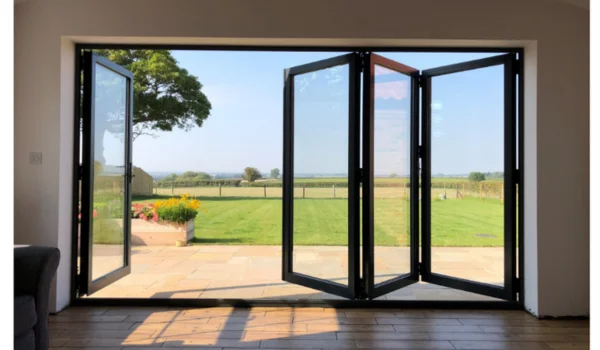
A home is essentially a container that has to be kept at a comfortable temperature despite the weather outside doing something quite different. In Indian summers, this means keeping heat out. In cooler months in northern India, it means keeping conditioned air in. Either way, the walls, roof, and openings are what stand between the interior climate and the exterior one, and how well they perform this job determines how much electricity the air conditioning has to consume to compensate.
Walls handle their share reasonably well. Standard brick or block construction with proper plastering offers substantial thermal resistance and requires little further attention in most residential contexts. Roofs need more thought, particularly on top-floor apartments and independent homes, but the technology to insulate them effectively is widely understood.
The openings are where the vulnerabilities concentrate. Glass conducts heat far more readily than solid wall material. The joints where window and door frames meet the building structure create potential pathways for uncontrolled air movement. And these two vulnerabilities, thermal transfer through the glazing itself and air infiltration around the frame, together account for a substantial proportion of the total cooling load in most Indian homes.
Premium aluminium windows address both simultaneously, and this is what makes them central to sustainable residential design rather than incidental to it.
What Double Pane Windows Actually Do?
The most visible energy-saving decision available in window specification is the choice of glass. Single-pane glass, still the default in older residential construction, offers minimal resistance to heat transfer. Solar radiation passes through it readily, warming the interior and forcing cooling systems to work harder to maintain comfort.
Double pane windows change this fundamentally. By separating two glass layers with an insulating air gap, they slow the movement of heat between outside and inside. The trapped air acts as a thermal buffer, reducing conductive and radiative heat transfer through the assembly. For south- and west-facing openings in Indian homes, where direct solar exposure is most intense from mid-morning through late afternoon, this specification alone can meaningfully reduce cooling energy consumption over the course of a year.
Beyond the basic double-glazed unit, further specifications refine the performance. Tinted double pane windows filter solar radiation before it enters the glazing assembly, reducing heat gain without significantly compromising light transmission. Laminated double-glazed configurations add acoustic and safety benefits on top of the thermal ones. Eternia’s aluminium window systems accommodate glass thicknesses from 5mm to 38mm across the range, supporting the full spectrum of single-pane, double-glazed, laminated, and double-glazed laminated options.
Air Sealing: The Performance Nobody Sees
If glass specification manages heat that enters through the window, air sealing manages the losses that happen around it. And this is where the difference between standard and premium aluminium window systems shows most clearly.
Every openable window has a joint where the sash meets the fixed frame. In poorly sealed systems, this joint allows air to pass in both directions, outside air infiltrating the interior, and conditioned air leaking outward. The exchange is continuous, invisible, and remarkably costly in energy terms. Air conditioning compressors run longer to compensate for losses the homeowner never sees. Over months and years, the accumulated electricity consumption from these losses becomes substantial.
Premium aluminium windows address this through engineered sealing systems. EPDM gaskets and high-quality woolpile create continuous contact between sash and frame. Multi-point locking mechanisms compress this contact uniformly, ensuring the seal holds under external pressure rather than gapping in the middle while sealing at the corners.
The Lifecycle Question
Operational energy, the electricity a home consumes in daily use, is the most visible dimension of environmental impact. But genuine sustainability considers a longer arc: the environmental cost of making the materials that go into the building, and what happens to those materials at the end of their useful life.
Aluminium performs well across both dimensions. It’s one of the most extensively recycled materials globally, and recycling aluminium requires roughly 5% of the energy needed to produce primary aluminium from bauxite ore. Crucially, aluminium can be recycled indefinitely without any degradation in quality, the metal in a recycled window frame is chemically identical to metal from primary production. This closed-loop recyclability is a genuine environmental advantage over uPVC, which degrades with each recycling cycle and is far less effectively reclaimed in practice.
Durability strengthens the lifecycle case further. Premium aluminium windows don’t need repainting. They don’t rot, warp, or swell under humidity. They resist termites, corrosion, and UV degradation. A well-installed aluminium window system will still be performing as designed after decades of daily use, whereas alternatives frequently need replacement within a fraction of that lifespan. Every replacement cycle avoided is embodied energy saved and waste diverted from landfill.
Eternia backs its systems with a 12-year warranty on profiles and a 5-year warranty on hardware, commitments that reflect genuine confidence in long-term performance. The systems are built on Duranium, a special aluminium alloy developed by Hindalco that is 40% stronger than standard aluminium. This additional strength allows for slimmer profiles that use less raw material per window, reducing the embodied energy of each unit while enabling the larger glass panels that support daylighting strategies.
How Energy Efficient Doors Fit the Same Logic?
The sustainability argument for aluminium windows applies with equal force to aluminium doors. Doors are, if anything, an even more critical air sealing concern than windows, they’re operated more frequently, their seals experience more wear, and any leakage around a poorly sealed door represents continuous energy loss.
Energy efficient doors in premium aluminium systems use the same sealing technology as the windows they’re paired with. EPDM gaskets, quality woolpile, and multi-point locking combine to create doors that seal effectively when closed while still operating smoothly through thousands of daily cycles. Double-glazed door panels bring the same thermal benefit to doors that they bring to windows. WiWA-certified performance ratings apply across Eternia’s door range just as they do across the window range.
For sustainable home design, treating doors and windows as a coordinated system rather than as separate elements is important. The thermal envelope only performs as well as its weakest point. Specifying premium windows while neglecting the doors, or vice versa, leaves an obvious vulnerability in what should be a continuous, well-sealed boundary between interior and exterior environments.
The Practical Case for Homeowners
The economics of investing in premium aluminium window systems for sustainability reasons are worth understanding clearly. The upfront cost is higher than standard alternatives. But the operational savings, lower cooling electricity consumption, lower maintenance requirements, longer service life before replacement, accumulate steadily across the decades that a well-installed system remains in service.
For homeowners genuinely serious about reducing their environmental impact, this is one of the highest-value decisions available in the entire home. It works quietly and continuously, requires no behavioural change, and delivers benefits from the day of installation onwards. Every unit of cooling energy avoided is a small contribution to a lower carbon footprint. Every year of service without replacement is a small contribution to reduced material consumption. These small contributions compound into something meaningful over the life of the home.
Sustainable design is ultimately about closing the gap between good intentions and actual performance. The home that looks sustainable but performs inefficiently is a missed opportunity. The home that performs efficiently, quietly, reliably, across decades, is the one that actually delivers on the promise. Premium aluminium windows and energy efficient doors are the elements most directly responsible for making that performance real.

No comments yet